Prayer & Gratitude
Prayer is a habit before it is a doctrine. These stories show a child what it looks like to speak plainly, and to notice what was already good about the day.
Start their storyStories inside
Three example books from this collection. Every story is written fresh from your own prompt, so no two families end up with the same one.
Story 01
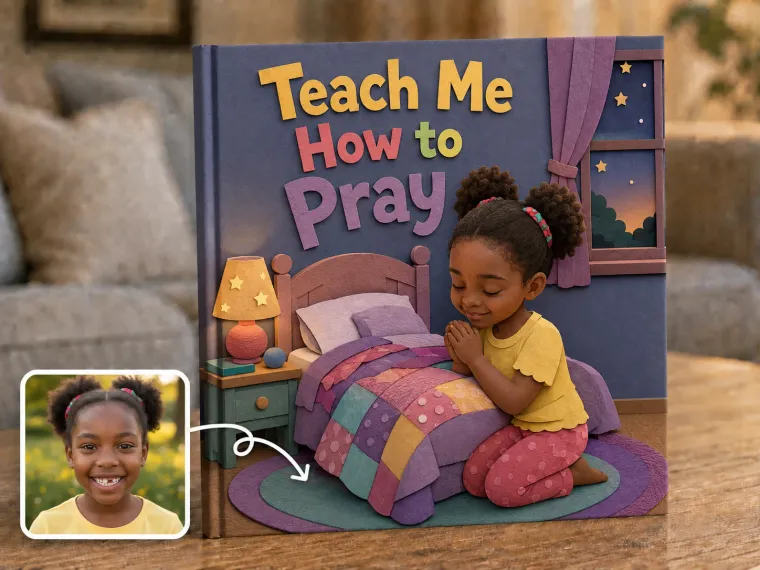
Teach Me How to Pray
Learning there is no wrong way to say what is on your heart.
Children often assume prayer has a correct format they have not been told, and then go quiet rather than get it wrong.
These stories take that worry apart. Your child tries it out at their bedside, in plain words, about whatever is actually on their mind.
There is no lesson at the end and no model prayer to copy. The point it makes is simply that speaking plainly counts, which is the thing most children need to hear first.
- What it draws on
- A worry about doing it wrong, a first attempt in plain words, and the quiet after.
- Your child's part
- The one praying, in their own words.
Story 02
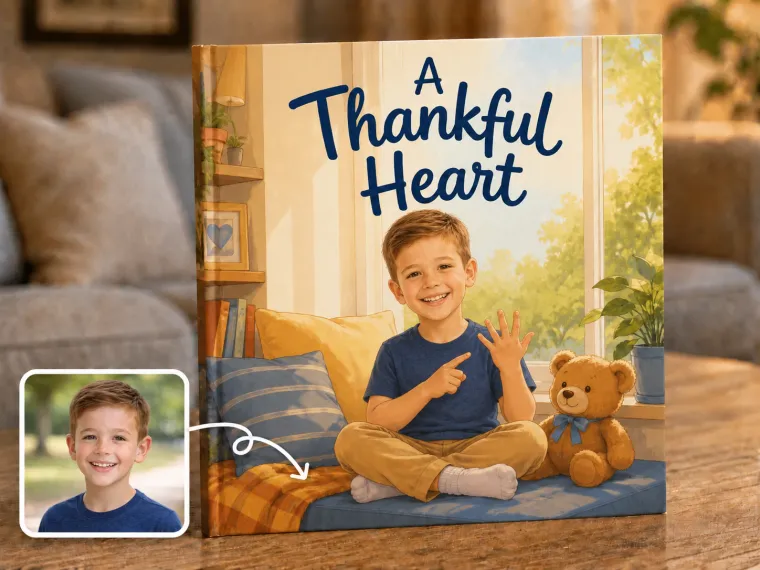
A Thankful Heart
Counting the ordinary good things until the list runs long.
Gratitude gets abstract fast, and an abstract picture book is a dull one. This story keeps its feet on the ground by counting.
Your child lists the ordinary things, out loud, on their fingers, and the illustrations show each one as it is named: the dog, the window seat, the person who makes breakfast.
The list runs longer than they expected it to. That is the whole argument, made without ever using the word gratitude.
- What it draws on
- A morning at the window, an ordinary list, and finding it goes on longer than expected.
- Your child's part
- The one counting, with their own list.
Story 03
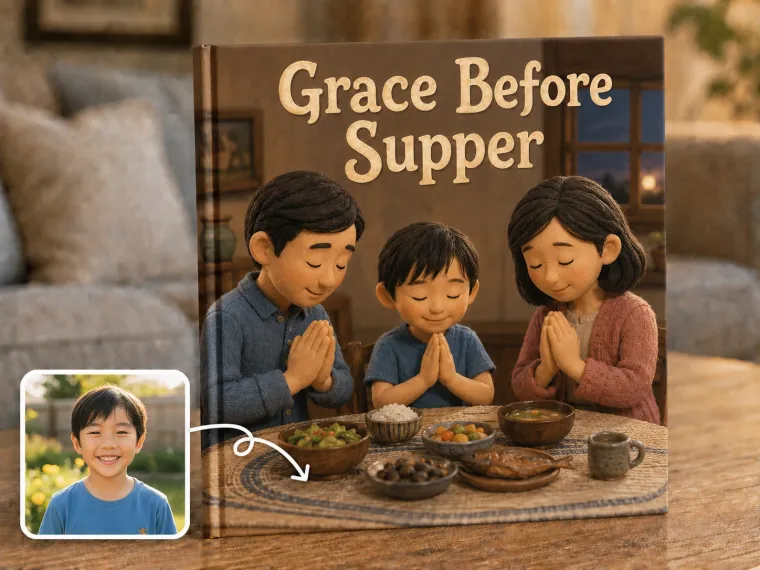
Grace Before Supper
A family table, a few quiet words, and the day handed over.
Saying grace can turn into a mumbled formality quickly, and children are the first to notice when the words have stopped meaning anything.
These stories slow the moment down to its parts: the food on the table, everybody's hands, the day each person has had, and a few words at the end of it.
It works as a gentle way to start the habit, or to restart it, and it is short enough to read while supper is going cold.
- What it draws on
- The table laid, the day each person has had, folded hands, and a few words.
- Your child's part
- At the table with the family, saying the words.
Their story starts here
Not sure which one? Start anywhere.
Every theme is free to preview from beginning to end. Build one, read it, and change your mind as many times as you like.
Preview their book freeFree preview · No payment required