Kindness & Forgiveness
Kindness and forgiveness are easier to show than to explain. These stories let your child watch themselves do the harder, better thing.
Start their storyStories inside
Three example books from this collection. Every story is written fresh from your own prompt, so no two families end up with the same one.
Story 01
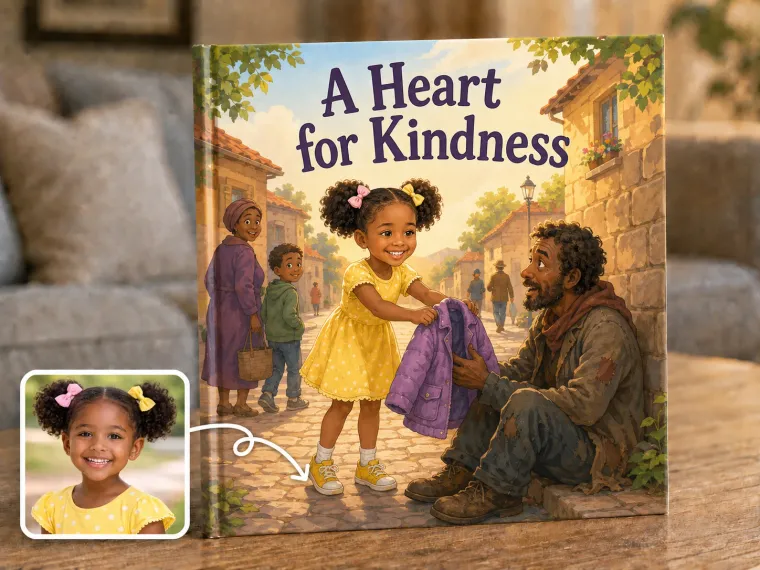
A Heart for Kindness
Noticing who needs help, and discovering that small kindnesses grow.
Kindness is easy to praise and hard to teach, mostly because it depends on noticing, and noticing cannot be instructed.
So it is about noticing. Your child is the one who sees the person sitting by the wall while everybody else walks on, and the illustrations follow their eyeline rather than the crowd's.
What they do about it is small and practical. The story stays that size on purpose, because a child can copy something that size tomorrow.
- What it draws on
- A busy street, someone easy to walk past, and one child who does not.
- Your child's part
- The one who notices, and the one who stops.
Story 02
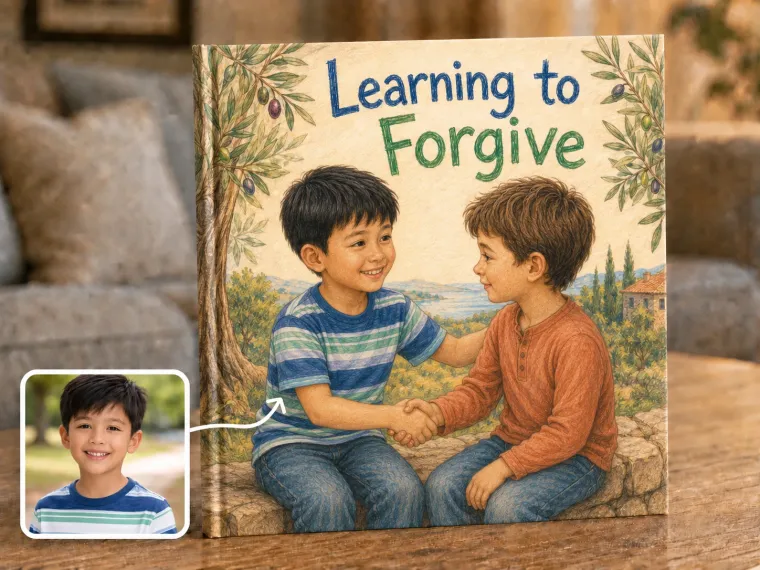
Learning to Forgive
What happens after sorry, and how a friendship is quietly mended.
Most books about apologising end at sorry. Sorry is the easy half, and children know it, which is why those books never quite land.
This one starts there instead. Two friends have already said the word and it has not fixed anything yet, and your child has to work out what comes next.
The mending is slow and a bit awkward, drawn over an afternoon on a low wall under an olive tree. Nobody is made to grovel, and the friendship comes back different rather than restored.
- What it draws on
- The falling out, the apology that does not fix it, the awkward afternoon, and the way back.
- Your child's part
- One half of the friendship, doing the harder part.
Story 03
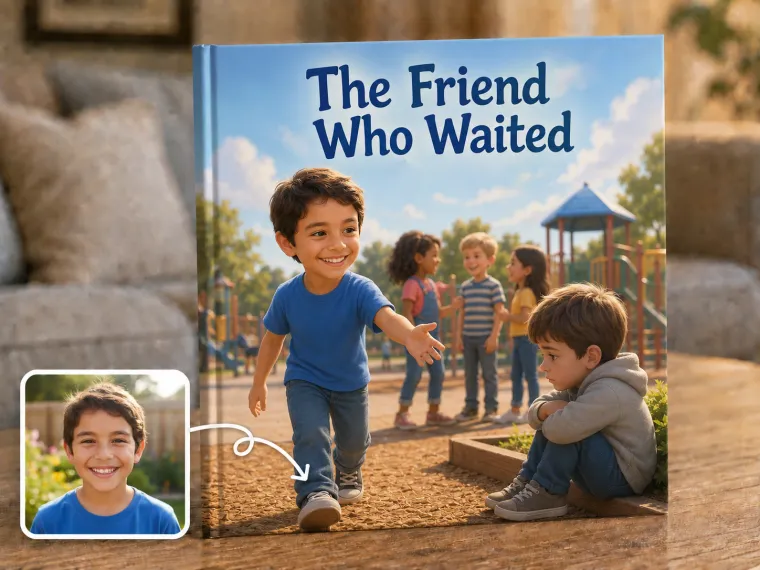
The Friend Who Waited
Being left out, and choosing to make room for someone else.
Being left out is a small event to an adult and an enormous one to a seven year old, and children can tell when a book is not taking it seriously.
This one does. Your child is standing at the edge of a group that has closed without meaning to, and the illustrations put real distance in the space between them.
Then it turns, and your child is the one crossing that space for somebody else. The second half matters more than the first.
- What it draws on
- A game already started, standing at the edge, and making room for someone else later.
- Your child's part
- Left out first, and the one who lets somebody in second.
Their story starts here
Not sure which one? Start anywhere.
Every theme is free to preview from beginning to end. Build one, read it, and change your mind as many times as you like.
Preview their book freeFree preview · No payment required